

Seasonal Traditions and Shared Tables: How Koreans Experience the Year Through Food
In early March, several meaningful dates appear close together on the Korean calendar.
March 1 marks Samiljeol, Korea’s Independence Movement Day, a national holiday commemorating the country’s modern history. Shortly afterward come Jeongwol Daeboreum, the first full moon of the lunar year, and Gyeongchip, one of the traditional seasonal divisions signaling the awakening of spring.
At first glance, these occasions may seem unrelated to industry or business. Yet for those working with Korean partners, understanding how Koreans perceive seasons and time offers subtle insight into the rhythm of society—and, indirectly, into the rhythm of business itself.
Unlike purely calendar-based cultures, Korea maintains a long tradition of marking seasonal transitions through food, shared customs, and collective experiences. These practices continue to coexist with modern commercial culture, forming a unique blend of tradition and contemporary lifestyle.
Traditional Seasonal Foods: Eating the Changing Seasons
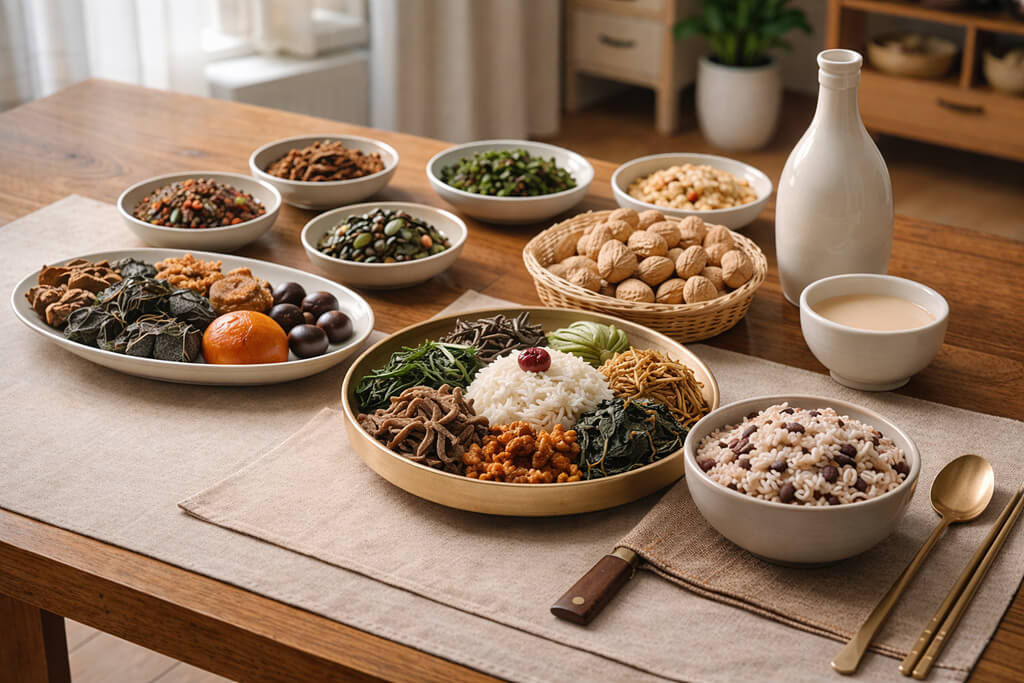
Jeongwol Daeboreum, celebrated on the first full moon of the lunar year, is one of Korea’s oldest seasonal observances. Rather than grand ceremonies, the day is defined by symbolic foods believed to promote health and good fortune throughout the year.
Typical foods include:
-
Ogokbap (Five-Grain Rice) – representing agricultural abundance and balance
-
Namul (Seasoned Vegetables) – dried greens prepared from the previous harvest, symbolizing continuity between seasons
-
Bureom (Hard Nuts) – cracked at dawn as a wish for strong teeth and protection from illness
-
Ear-Clearing Wine (Gwibalgisul) – traditionally consumed in small amounts for good hearing and clarity in the coming year
These customs reflect an agricultural heritage where seasonal awareness was essential for survival. Even today, many Koreans continue these traditions—not necessarily out of ritual obligation, but as a cultural connection to shared history.
Food, in this context, functions as a social language: a way of acknowledging time, nature, and community simultaneously.
Modern Traditions: When Culture Meets Everyday Life
Alongside centuries-old customs, Korea has developed newer, informal traditions shaped by modern consumer culture.
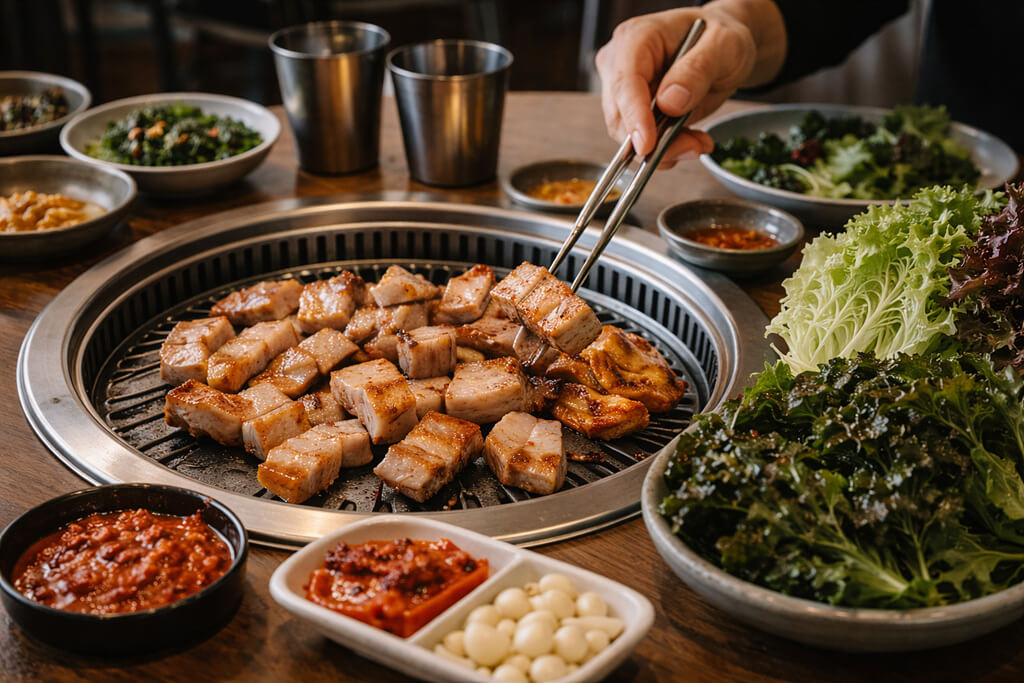
One example is “Samgyeopsal Day” (March 3)—a playful commercial observance based on the pronunciation of the number three (“sam”), encouraging people to eat samgyeopsal (grilled pork belly). While not historically traditional, it has become widely recognized and embraced across generations.
Similarly, Koreans associate certain foods with shared experiences:
-
Rainy days → Makgeolli and savory pancakes (jeon)
-
Summer heat → Samgyetang (ginseng chicken soup) for stamina
-
Winter cold → Dongchimi cold noodles, enjoyed despite freezing temperatures
-
Friday evenings → Chicken and beer (“Chimaek”), symbolizing relaxation after the workweek
These patterns reveal an important cultural characteristic: Koreans often interpret seasonal or emotional moments collectively through food. The practice strengthens social cohesion and reinforces a shared national rhythm.
Cultural Rhythm and Business Understanding
For international partners, these traditions may appear purely cultural. However, they subtly influence professional environments as well.
Seasonal holidays, lunar calendar events, and shared cultural periods can affect:
-
Communication timing
-
Logistics scheduling
-
Production planning
-
Workforce availability
-
Consumer demand cycles
Understanding these rhythms does not require participation—but awareness helps contextualize how Korean companies operate within society.
In many cases, strong business relationships emerge not only from technical alignment but also from cultural familiarity. Recognizing seasonal context can improve expectations regarding response times, shipment planning, or operational tempo.
Tradition, Modernity, and Korea’s Industrial Identity
Korea’s rapid industrialization is often described through technology, manufacturing efficiency, and export performance. Yet beneath this modern industrial framework remains a society that continues to value shared seasonal experiences.
The coexistence of traditional lunar holidays and modern marketing-driven celebrations illustrates how Korea balances heritage and innovation—an approach also visible in its automotive and manufacturing sectors, where legacy expertise and advanced technology evolve simultaneously.
Just as Korean cuisine adapts while preserving core traditions, Korean industry continues transforming while maintaining deeply rooted social structures.
A Cultural Note for Global Automotive Partners
At Koreapartsinfo.com, our goal extends beyond technical information about automotive parts and manufacturers. We aim to provide context—helping global buyers better understand the environment in which Korean suppliers operate.
Understanding culture does not replace technical evaluation or commercial negotiation. However, it often strengthens long-term cooperation by adding clarity to expectations and communication.
As spring approaches in Korea, marked by full moons, seasonal foods, and shared meals, it also signals renewal—a concept equally familiar in industry, partnerships, and global collaboration.
We hope this cultural glimpse offers helpful perspective alongside the technical insights we continue to share with the global automotive community.
Thank you for visiting Koreapartsinfo.com.
Your subscription and comments are always welcome.


Leave A Comment
You must be logged in to post a comment.